
Key Takeaways
- AI agents fail in complex codebases not due to a lack of intelligence, but a lack of contextual awareness—they are effectively "blind" to the architectural rules and implicit constraints of a repository.
- The common solution of creating massive system prompts (e.g., a 500-line
AGENTS.md) is a fallacy. It saturates the Model Context Protocol (MCP), becomes quickly outdated ("prompt rot"), and fails to scale.- Harness Engineering is the necessary paradigm shift: Treat the code repository itself as the agent's Operating System. This involves codifying architectural rules, dependency graphs, and validation logic directly into the repo as enforceable scripts and structured documentation.
- The human developer's role evolves from writing implementation code to designing the "Harness"—the system of constraints and verification pipelines that enables an agent to reliably produce correct code.
- For enterprises, this model must scale beyond a single repository. Epsilla's Semantic Graph acts as the global, cross-repository Operating System, providing persistent structural memory that our AgentStudio (AaaS) platform leverages for complex, multi-system tasks, all audited by ClawTrace.
An AI agent, tasked with implementing a new feature, begins to code. It produces 200 lines of clean, functional Go. Then, the linter runs and fails catastrophically. The agent, in its logical process, imported a configuration package directly into a type definition file. This is a cardinal sin against the established architectural layering, a rule the agent was never told and could not see.
The agent, dutifully, begins to refactor. It moves code, adjusts dependencies, and reorganizes modules. It runs the linter again. A new, different failure emerges. After three such cycles, the context window is a graveyard of error logs and diffs. The model, now overwhelmed with low-signal noise, begins to lose track of the original mission. It starts hallucinating solutions to problems that don't exist.
This isn't a failure of the model's reasoning ability. It's a failure of its sensory apparatus. The agent is blind.
This scenario is playing out in engineering teams globally. An agent remembers your architectural conventions one day, only to suffer from total amnesia in a new session the next. Every interaction requires a tedious re-explanation of background, layering rules, and naming conventions. The code it generates might run, but it violates every team norm, creating a mountain of technical debt discovered only during a painful human code review.
A junior human engineer, similarly unfamiliar with the codebase, would at least ask questions. "Which directory should this file go in?" "Is this import permissible?" They seek validation before committing to a path. Today's agents, powered by models like GPT-5 or Claude 4, do not. They act with decisive, and often misguided, confidence.
The fundamental flaw is not in our prompts. It is in our premise. We believe we can teach an agent the complexities of a mature codebase through natural language instruction. This is a dead end. No prompt, however detailed, can exhaust the implicit rules of a living software project. No context window, however vast, can contain the terabytes of design decisions, trade-offs, and tribal knowledge embedded in a repository's history. The path of "better prompting" has a low ceiling, defined by the physics of the Model Context Protocol (MCP). You will always be chasing the moving target of an evolving system.
A different approach is required. We must shift our thinking from instructing the agent to constraining its environment. This is the principle of Harness Engineering.
The Repository as the Agent's Operating System
A powerful CPU is just a sophisticated space heater without an operating system. It has immense computational potential but no concept of a file system, a network stack, or memory permissions. It is a brain in a vat. Large Language Models are the same. Their reasoning capabilities are formidable, but they are fundamentally unaware that your internal/types/ package cannot import internal/config/, or that new API handlers must be placed in a specific directory.
Harness Engineering provides the agent with its OS. The repository is no longer just a collection of source files; it is a structured, self-validating environment. This philosophy is built on a few first principles.
1. The Git Repository is the Sole Source of Truth. Discussions in Slack, verbal agreements in planning meetings, and architectural diagrams on a whiteboard are ghosts to an AI agent. If a rule is not codified and versioned within the Git repository, it does not exist. The first step of Harness Engineering is to transmute all implicit knowledge into explicit, machine-readable artifacts. Architectural decisions, layering constraints, and naming conventions must be committed as versioned files. Knowledge must travel with the code. When a new developer—or a new agent—clones the repository, they receive the complete, executable context.
2. AGENTS.md is a Bootloader, Not the Kernel. The knee-jerk reaction for many teams is to create a monolithic AGENTS.md file, a 500-line behemoth detailing every possible rule. This is a critical mistake. When everything is important, nothing is. This bloated file consumes the most valuable resource an agent has—its context window—leaving little room for the actual task. It also suffers from "prompt rot," rapidly falling out of sync with the codebase it purports to describe.
Under the Harness paradigm, AGENTS.md should be treated as a bootloader or an index map. It must be brutally concise, perhaps under 100 lines. Its sole purpose is to point the agent to the right, more detailed documentation on demand. For a task involving the authentication module, the agent first reads AGENTS.md, finds the entry for auth, and is directed to load docs/design-docs/auth.md. The documentation for the billing module remains unloaded, preserving context. This "just-in-time" context loading is efficient MCP management.
3. Enforce Architectural Boundaries, Not Implementation Dogma. A well-designed Harness does not micromanage. It does not dictate whether an agent should use a specific design pattern or how a function must be written. It cares only about the macro-level architectural integrity. Most codebases have a natural dependency direction: core types are imported by many, business logic depends on types but not on the HTTP layer, and HTTP handlers depend on business logic.
Harness Engineering codifies this as an explicit layering system. For example:
- Layer 0: Core types and interfaces (imports no other internal packages).
- Layer 1-2: Utility functions, configuration, and clients (imports only from lower layers).
- Layer 3: Core business logic and services.
- Layer 4+: API handlers, CLI commands, and other entry points.
The rule is simple and absolute: a higher layer can import from a lower layer, but the reverse is forbidden. Within these boundaries, the agent has complete autonomy. This mirrors the effective management of large platform teams: centralized constraints, local autonomy.
4. The Human's Role Shifts to System Architect. The paradigm in which a human writes code and an AI provides autocompletion is obsolete. The future is the inverse: the human designs the system—the architecture, constraints, and verification rules—and the agent executes within that system. The value of a senior engineer is no longer measured by their lines of code per day, but by their ability to design a Harness that allows a fleet of agents to reliably produce correct, maintainable code. You are no longer tightening every bolt on the assembly line; you are designing the assembly line itself.
The Anatomy of a Harnessed Repository
This is not merely a theoretical framework. A practical implementation of Harness Engineering relies on two engines: a harness-creator for scaffolding and a harness-executor for task execution. The executor, when initiated in a new project, first checks for an AGENTS.md. If it's missing, it invokes the creator to audit the codebase and build the necessary infrastructure.
A mature, harnessed project contains a specific, purposeful structure:
my-project/
├── AGENTS.md               # The lightweight navigation map (~100 lines)
├── docs/
│   ├── ARCHITECTURE.md     # High-level architecture, layering, dependency rules
│   ├── DEVELOPMENT.md      # Build, test, and lint commands
│   ├── PRODUCT_SENSE.md    # Business context and user personas
│   └── design-docs/        # Granular design docs for major components
├── scripts/
│   ├── lint-deps.py        # Enforces architectural layer dependencies
│   ├── lint-quality.sh     # Enforces code quality and style conventions
│   └── verify_action.py    # Pre-emptive validation for agent actions
└── [source_code...]
The scripts/ directory is the heart of the enforcement mechanism. It contains the "system calls" of the agent's OS. These are not suggestions; they are immutable laws. The lint-deps.py script, for instance, programmatically scans all import or require statements and fails the build if a Layer 4 module attempts to import from another Layer 4 module. These scripts transform team conventions from "things we hope people follow" to "things the system will not allow you to violate."
The most significant workflow change is the shift from post-mortem validation to pre-emptive verification. An unharnessed agent's loop is: write code -> run tests -> see failure -> fix code. This is incredibly inefficient, consuming dozens of expensive model calls to fix a single architectural violation.
A harnessed agent's workflow is: propose action -> verify action -> execute action. Before writing a single line of code, the agent uses a tool like verify_action.py to check the legality of its plan:
> python3 scripts/verify_action.py --action "create file internal/types/user.go" ✓ VALID: 'internal/types/' is Layer 0, 'user.go' follows naming convention.
> python3 scripts/verify_action.py --action "add import 'internal/config' to 'internal/types/user.go'" ✗ INVALID: Layer 0 package 'internal/types' cannot import Layer 2 package 'internal/config'.
This pre-flight check costs two tool calls and prevents a mistake that might have cost twenty calls to debug and fix. It is the programmatic equivalent of a junior engineer asking for guidance before going down the wrong path for three hours.
The Enterprise Challenge: Scaling Beyond the Single Repository
Harness Engineering provides a robust OS for a single codebase. But modern enterprises are not monoliths. They are sprawling ecosystems of hundreds or thousands of microservices, libraries, and repositories. A harness confined to one repository is a local solution to a global problem. How does an agent working on the user-service know about a breaking API change in the auth-service? How are enterprise-wide security policies and compliance rules enforced consistently across every team?
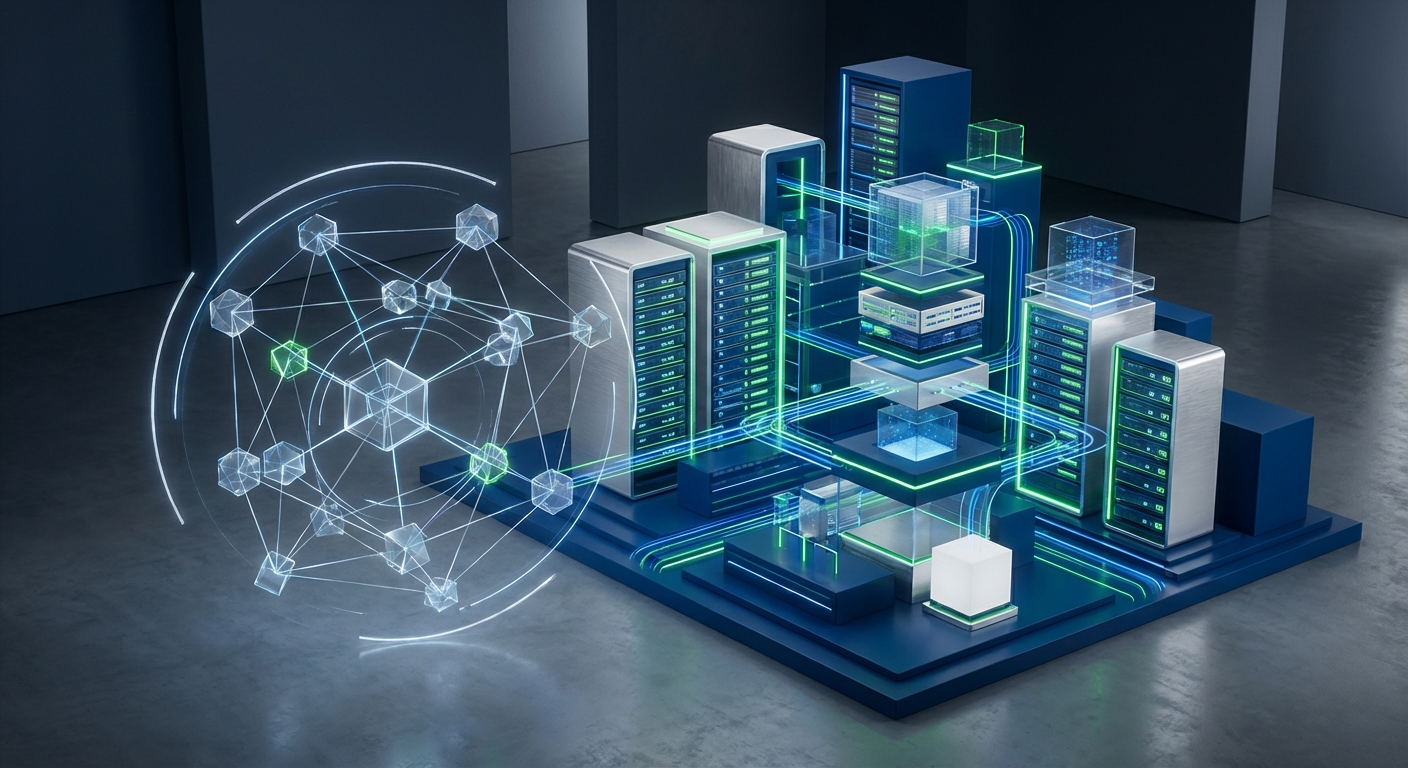
This is the problem we designed Epsilla to solve. If a single repository is an agent's local OS, Epsilla's Semantic Graph is the enterprise-wide Control Plane.
Our Semantic Graph ingests and analyzes every repository, building a comprehensive, relational model of the entire software ecosystem. It doesn't just see files; it understands dependencies between services, ownership, API contracts, and the codified architectural rules from every individual Harness. It provides the persistent structural memory that no single agent session can maintain.
Our Agent-as-a-Service (AaaS) platform, AgentStudio, deploys agents that operate on top of this global Semantic Graph. When an agent is tasked with a cross-cutting concern—like updating all services to use a new logging library—it doesn't need to be "taught" about each repository. It queries the Semantic Graph to identify all affected services, understands their individual test and deployment pipelines (as defined in their local Harnesses), and executes the change systematically and correctly across the entire organization.
Furthermore, this level of autonomous operation demands a new class of security and oversight. Every action taken by an agent orchestrated through AgentStudio is tracked and audited via ClawTrace. ClawTrace integrates with the Semantic Graph to enforce granular Role-Based Access Control (RBAC), ensuring that an agent tasked with updating documentation cannot access production deployment keys. It provides a complete, immutable audit trail for compliance and security forensics.
The future of software development is not simply about more powerful LLMs. It is about building the structured, verifiable, and secure environments in which these powerful models can operate effectively and safely. It begins with applying Harness Engineering to a single repository. It scales to the enterprise with a global Semantic Graph. The paradigm is shifting from prompt engineering to systems engineering. The time to start building your Harness is now.
FAQ: Harness Engineering and Enterprise Agents
What is the core difference between Harness Engineering and a good CI/CD pipeline?
A CI/CD pipeline is a post-mortem check; it validates code after it has been written and committed. Harness Engineering is a pre-emptive, developmental environment that guides the agent to write correct code from the start, using fast, local validation scripts to prevent entire classes of errors before they are ever written.
Does this new paradigm mean developers will stop writing code?
No, it elevates their role. Developers will shift from writing routine implementation code—a task increasingly well-suited for agents—to designing and maintaining the Harness itself. Their focus becomes system architecture, defining constraints, and building the automated verification tools that guarantee quality and consistency at scale.
How does Epsilla's Semantic Graph differ from a simple code search tool?
A code search tool indexes text and finds patterns. A Semantic Graph builds a structured, relational model of your entire engineering ecosystem. It understands that a specific API endpoint in one service is consumed by three other services, that a particular library has a designated owner, and that a security policy applies to all code handling PII, regardless of the repository it lives in. It's the difference between a dictionary and an encyclopedia.