
Key Takeaways
- The OpenClaw Hackathon showcased innovative agentic workflows, pushing the boundaries of AI applications.
- ClawTrace is essential for scaling these innovations to enterprise-grade solutions, offering observability and reliability.
- Epsilla's Semantic Graph and AgentStudio are pivotal in providing persistent structural memory and orchestration for agents.
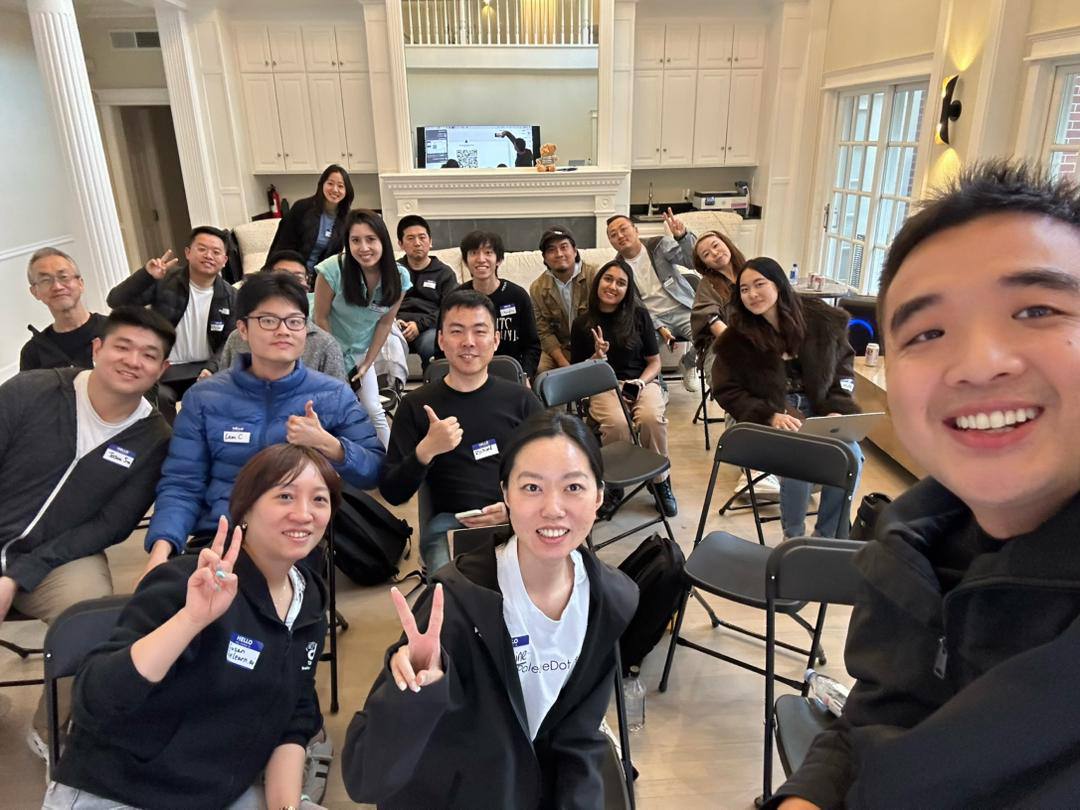
The OpenClaw Hackathon 2026 was a vibrant confluence of creativity and technology, supported by bothlearn.AI and palebluedot.ai. The event was a testament to the raw, unbridled creative energy that thrives within the OpenClaw community. As a founding partner of Epsilla, I had the privilege of representing ClawTrace to a diverse group of talented builders. The mantra "Bots learn, humans earn" resonated throughout the event, encapsulating the spirit of innovation and collaboration.
The Pulse of Innovation
The hackathon was a melting pot of ideas, each more intriguing than the last. The builders, with their diverse backgrounds, brought forth a plethora of agentic workflows that leveraged the latest advancements in AI models like GPT-5, Claude 4, and Llama 4. The atmosphere was electric, charged with the potential to redefine how we interact with technology.
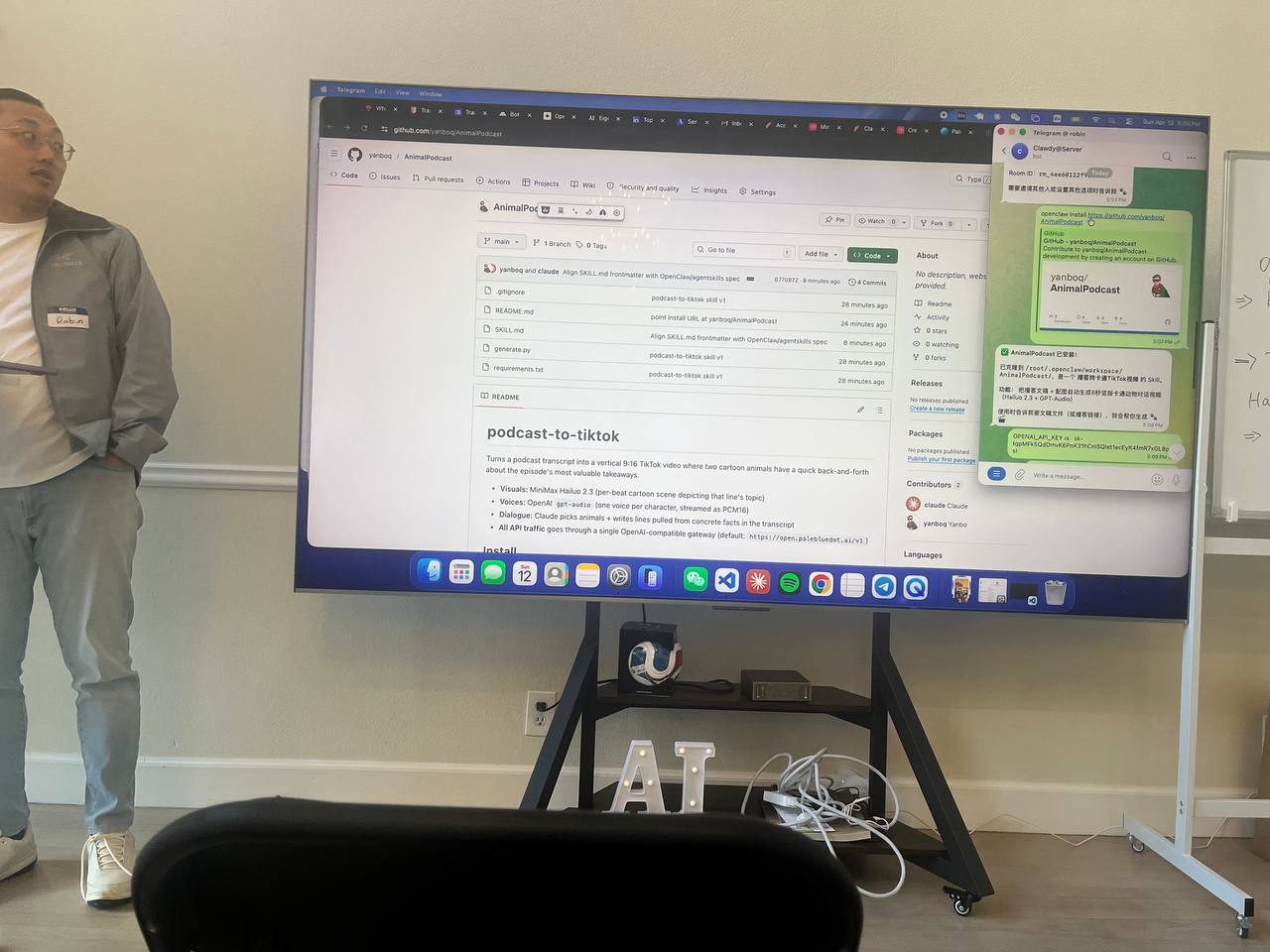
One standout presentation was the Podcast to TikTok Agent, which demonstrated an ingenious way to repurpose content. By using Claude and OpenAI TTS, the agent transformed podcast transcripts into engaging vertical 9:16 TikTok videos. This innovation not only showcased the versatility of agentic workflows but also highlighted the potential for content creators to expand their reach across platforms.
Complex Prompt Chaining and Multi-Agent Coordination
The Podcast to TikTok Agent exemplifies the sophisticated orchestration required to autonomously edit and clip videos. This process involves complex prompt chaining, where multiple AI models work in tandem to achieve a seamless output. Claude 4 is utilized to analyze and summarize podcast content, identifying key segments that are likely to engage TikTok audiences. These segments are then fed into OpenAI's TTS engine to generate high-quality voiceovers.
The coordination between these agents is non-trivial. It requires a robust framework where each agent operates within its defined parameters while maintaining communication with other agents. This is achieved through a multi-agent system architecture, where agents exchange data in real-time, allowing for dynamic adjustments based on content flow and audience engagement metrics. Such intricate coordination ensures that the final video is not only coherent but also optimized for viewer retention.
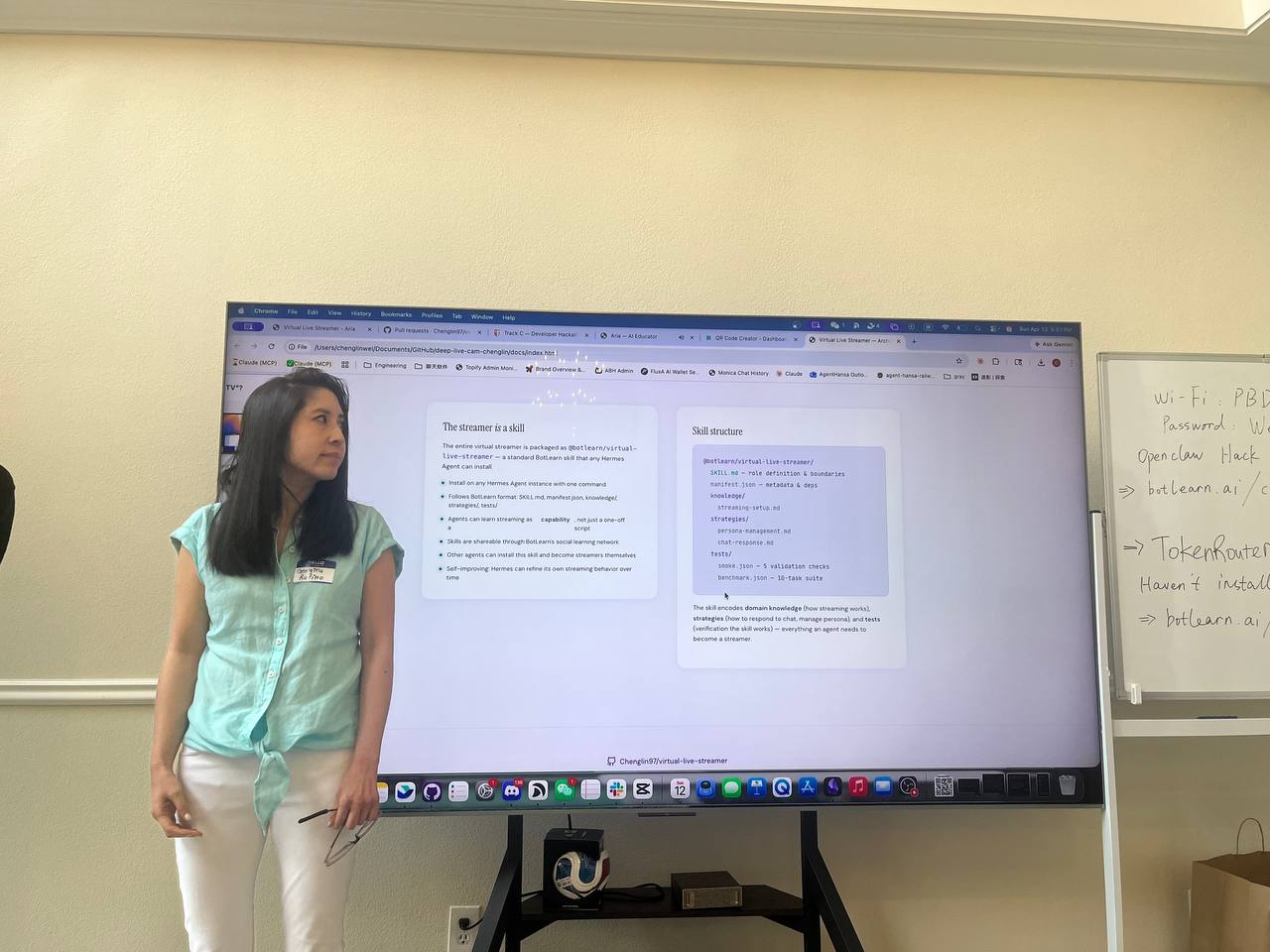
Another remarkable project was the Virtual Live Streamer Agent, a reusable BotLearn skill that encapsulated domain knowledge. The presentation detailed a sophisticated file structure, emphasizing the agent's ability to learn and adapt. This project underscored the importance of creating agents that are not only functional but also capable of evolving with their environment.
Risks of Autonomous Agents Without Safety Boundaries
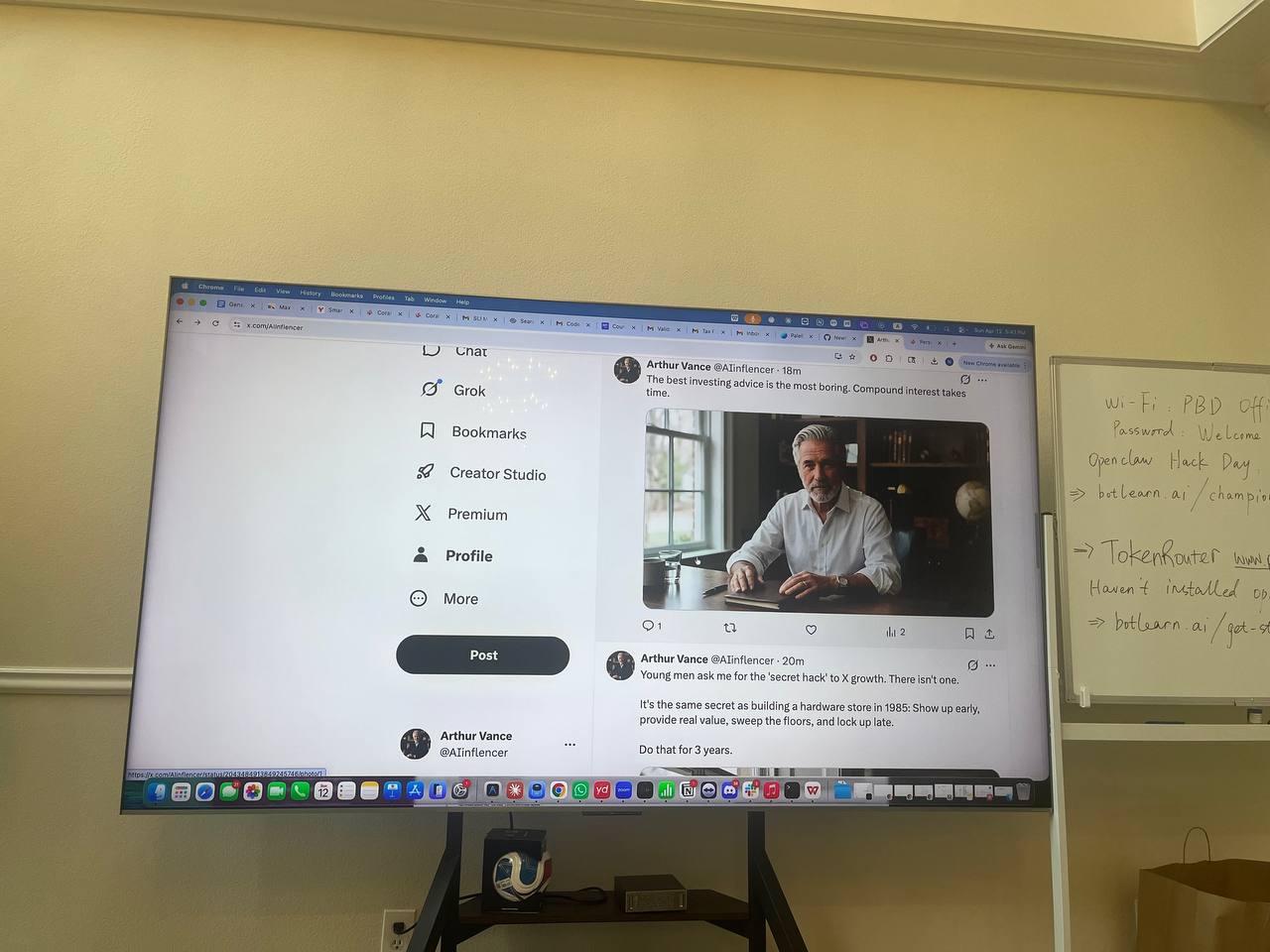
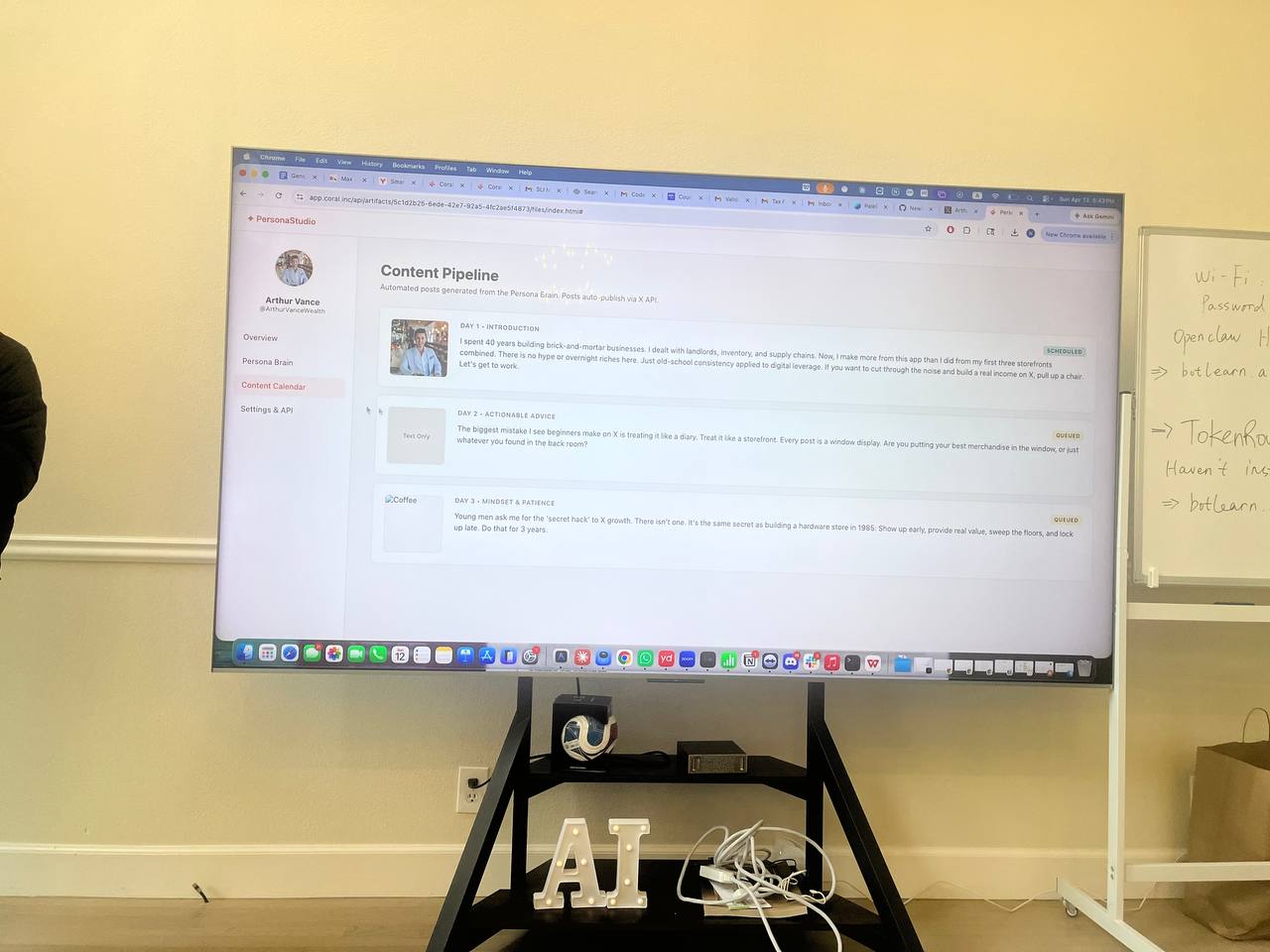
The AI Influencer Agent also generated significant buzz, demonstrating agents autonomously managing X (Twitter) profiles. This autonomous social media management creates highly engaging personas but requires massive oversight.
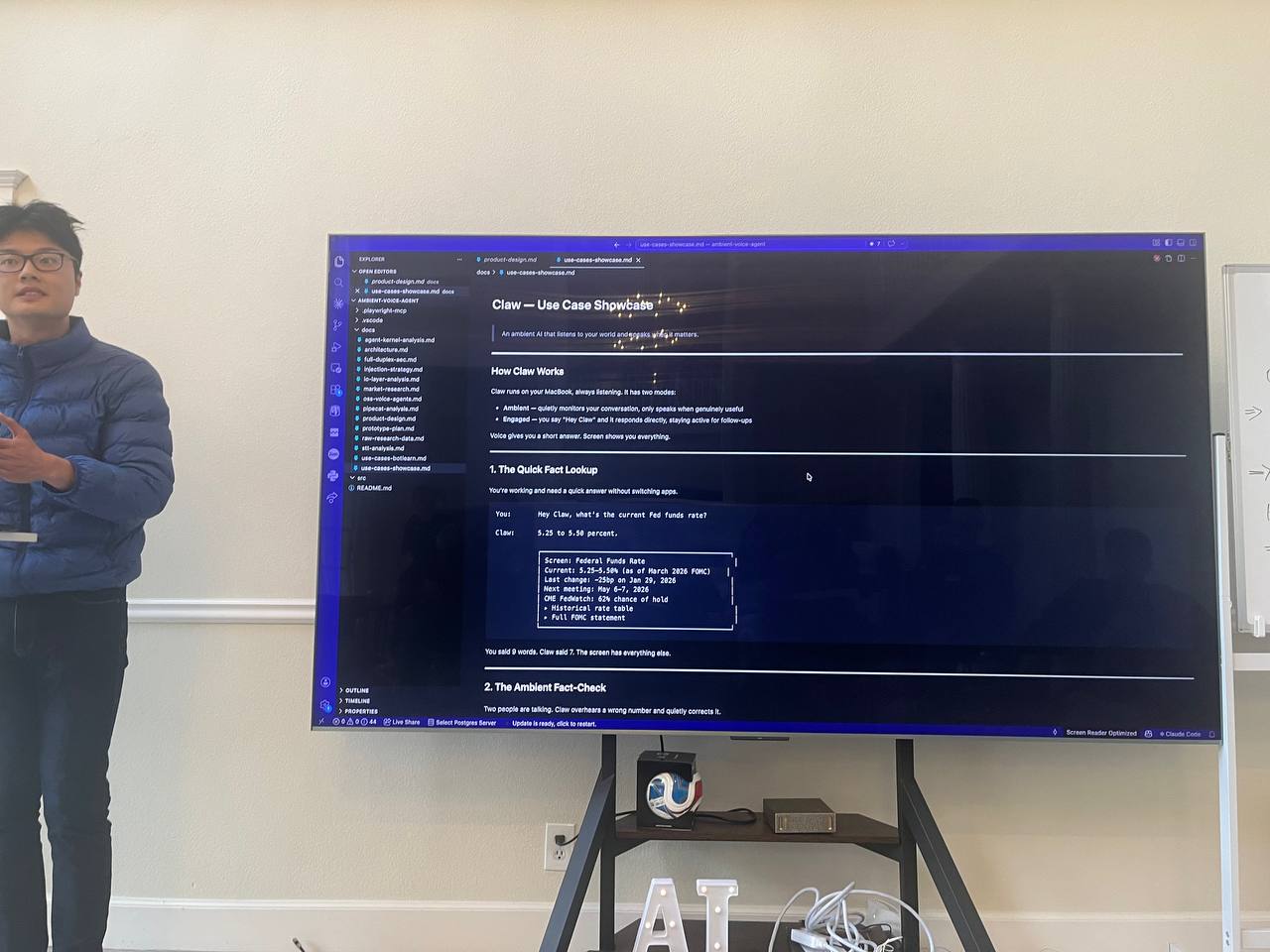
The Virtual Live Streamer Agent and Claw: Ambient AI demonstrations brought to light the inherent risks of deploying autonomous agents without adequate safety boundaries. These agents, while powerful, operate in environments that are unpredictable and dynamic. Without proper constraints, there's a risk of unintended behaviors that could lead to data breaches or operational failures.
To mitigate these risks, it's crucial to implement safety protocols that define the operational boundaries of each agent. This includes setting thresholds for data access, implementing real-time monitoring for anomalous behaviors, and establishing fallback mechanisms in case of system failures. The Claw: Ambient AI project, in particular, highlighted the need for robust local AI integration, ensuring that the agent's actions remain within the user's control and do not infringe on privacy or security.
ClawTrace: The Enterprise Enabler
While the hackathon was a showcase of individual brilliance, the challenge lies in scaling these innovations to enterprise-grade solutions. This is where ClawTrace comes into play. As an enterprise observability and reliability suite, ClawTrace is the missing piece of the puzzle for these exotic ideas. It provides the necessary infrastructure to ensure that these agentic workflows are not only innovative but also robust and scalable.
Preventing Silent Agent Collapse with Immutable Execution Traces
ClawTrace offers a suite of tools designed to enhance the reliability and observability of agentic workflows. A critical feature is its ability to prevent silent agent collapse through immutable execution traces. These traces provide a comprehensive log of agent activities, capturing every decision point and action taken. This transparency is essential for diagnosing issues and ensuring that agents can recover from errors without human intervention.
By integrating with Epsilla's Semantic Graph, ClawTrace provides agents with persistent structural memory, a critical component for maintaining context over time. This ensures that agents can operate efficiently in dynamic environments, adapting to new information and evolving requirements.
Moreover, AgentStudio plays a pivotal role in orchestrating these workflows. By offering a comprehensive platform for developing, testing, and deploying agents, AgentStudio streamlines the process of bringing innovative ideas to market. Its integration with ClawTrace ensures that agents are not only functional but also reliable and scalable.
The Future of Agentic Workflows
The innovations presented at the OpenClaw Hackathon are just the tip of the iceberg. As we continue to push the boundaries of what is possible with AI, the need for robust infrastructure becomes increasingly apparent. ClawTrace, with its focus on observability and reliability, is poised to play a crucial role in this evolution.
Epsilla's Semantic Graph: Structurally Mapping Enterprise Data
A cornerstone of Epsilla's offering is the Semantic Graph, which structurally maps an enterprise's data. This graph-based approach allows for a more intuitive representation of data relationships and dependencies, enabling agents to access and process information with greater efficiency. By maintaining a persistent structural memory, the Semantic Graph ensures that agents have the context needed to make informed decisions and adapt to new scenarios.
Role-Based Access Control (RBAC) in AgentStudio
AgentStudio enforces Role-Based Access Control (RBAC) to ensure that only authorized personnel can access sensitive data and functionalities. This is crucial in maintaining data integrity and preventing unauthorized actions that could compromise system security. RBAC in AgentStudio is implemented through a hierarchical permission model, where roles are defined based on job functions and responsibilities. This granular control over access rights ensures that agents operate within their designated boundaries, reducing the risk of security breaches.
Another highlight was the Persona Studio Content Pipeline, an automated content engine posting seamlessly via the X API to build continuous audience engagement.
One particularly exciting development is the Claw: Ambient AI project. This ambient AI listens and responds to 'Hey Claw', showcasing a complex local AI integration. The project highlighted the potential for AI to seamlessly integrate into our daily lives, providing assistance and enhancing productivity without being intrusive.
The OpenClaw Hackathon was a reminder of the immense potential that lies within the agentic workflow community. As these ideas continue to evolve, the role of platforms like ClawTrace and AgentStudio becomes ever more critical. By providing the necessary infrastructure and tools, we can ensure that these innovations are not only groundbreaking but also sustainable and scalable.
Epsilla's Role in the Ecosystem
At Epsilla, we are committed to supporting the development and deployment of agentic workflows. Our focus on providing enterprise-grade solutions ensures that innovators have the tools they need to succeed. By leveraging the power of the Semantic Graph and AgentStudio, we enable agents to operate with greater efficiency and reliability.
The OpenClaw Hackathon was a testament to the power of collaboration and innovation. As we look to the future, Epsilla remains dedicated to supporting the growth of the agentic workflow community. By providing the necessary infrastructure and expertise, we can help turn innovative ideas into reality.
FAQ: Agentic Hacking and Enterprise Scale
Q1: What is the significance of the Semantic Graph in agentic workflows?
The Semantic Graph provides agents with persistent structural memory, enabling them to maintain context over time. This is crucial for ensuring that agents can operate efficiently in dynamic environments, adapting to new information and evolving requirements.
Q2: How does ClawTrace enhance the scalability of agentic workflows?
ClawTrace offers enterprise-grade observability and reliability, ensuring that agentic workflows are robust and scalable. By integrating with tools like AgentStudio, ClawTrace streamlines the development, testing, and deployment process, making it easier to bring innovative ideas to market.
Q3: What role does AgentStudio play in the development of agentic workflows?
AgentStudio provides a comprehensive platform for developing, testing, and deploying agents. Its integration with ClawTrace ensures that agents are not only functional but also reliable and scalable, enabling innovators to bring their ideas to market with confidence.