Key Takeaways
- The OpenAI Codex team’s “zero documentation” policy is a hyper-optimized strategy for a small, elite, greenfield team, but it represents a catastrophic risk for large-scale enterprises.
- The core fallacy is believing human memory can scale as the primary container for institutional knowledge. In the enterprise, this leads to context loss, duplicated effort, and systemic fragility as people inevitably leave.
- Codex's "Plan Mode" is a primitive but powerful glimpse into the future. However, its effectiveness is capped by its limited context (the local codebase). True agentic development requires a persistent, global context of the entire organization.
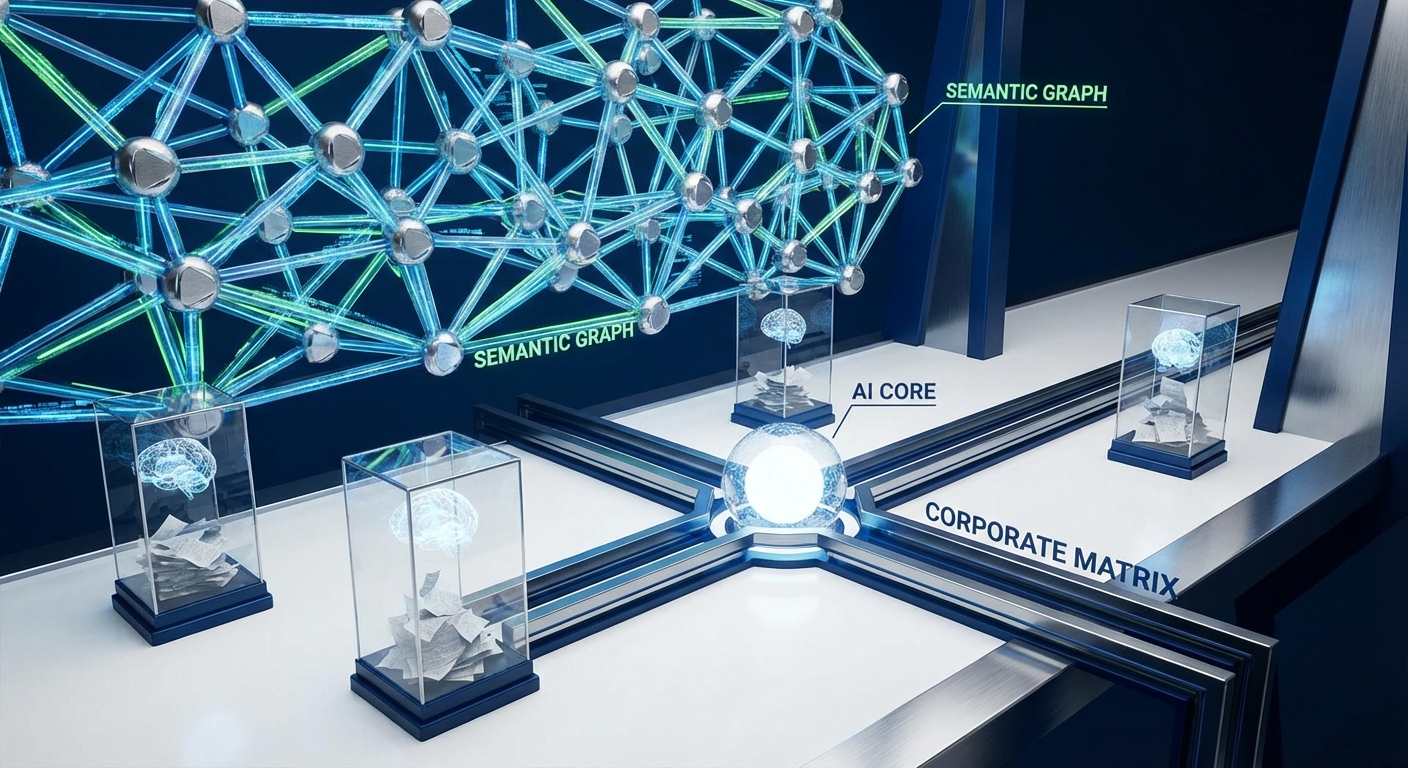
- The enterprise solution is not "zero documentation," but "zero manual documentation." This is achieved through a Semantic Graph—a living, machine-readable model of your organization's code, APIs, business logic, and dependencies that acts as the ground truth for AI agents.
- Platforms like Epsilla's AgentStudio provide the Agent-as-a-Service (AaaS) layer necessary to deploy, manage, and govern these context-aware agents, with every action audited by systems like ClawTrace.
A recent Silicon Valley podcast featuring OpenAI’s Codex leadership, Alexander Embiricos and Romain Huet, offered a fascinating, unvarnished look into one of the world's most advanced software development teams. They revealed a culture that is as radical as it is effective for their specific context: they write almost no technical documentation. The team, which scaled from 8 to over 50 in a year, operates on the principle that context should live in the head of the "builder," who then delegates the mechanical act of coding to the AI. Documentation is a last resort, reserved only for massive, multi-person coordination efforts and capped at a mere ten bullet points.
This is a seductive idea. It speaks to a frictionless, high-velocity future where the sludge of process is eliminated, and pure creation is all that remains. For a small, co-located team of elite talent working on a greenfield project with a singular focus, it’s a defensible—and perhaps even optimal—strategy.
But for the 99% of us operating in the complex, sprawling reality of enterprise engineering, this "zero-doc" philosophy is not just a fallacy; it's a blueprint for disaster. It fundamentally misunderstands the nature of institutional knowledge, the inevitability of employee turnover, and the non-negotiable requirements of security, compliance, and scale.
The future of enterprise development isn't about eliminating documentation. It's about eliminating manual documentation and replacing it with a living, intelligent, and persistent context layer that empowers AI agents to operate safely and effectively.
The OpenAI Anomaly: Why "Zero-Doc" Works in a Vacuum
Let's first give credit where it's due. The Codex team's approach is a masterclass in optimizing for a specific set of variables.
- Extreme Talent Density: OpenAI hires for extreme agency and a proven portfolio. This creates a team of builders who can hold vast, complex systems in their heads. The "bus factor" is less of a concern when every team member is a 10x engineer deeply enmeshed in the project's daily evolution.
- Greenfield Environment: They are not wrestling with a 20-year-old COBOL codebase or navigating a labyrinth of microservices built by teams that disbanded a decade ago. They are building from scratch, allowing for a coherent architecture to form organically.
- Singular Focus: The team is united by a single, clear mission: building Codex. This alignment drastically reduces the need for the kind of cross-departmental coordination and documentation that defines life in a Fortune 500.
- The Ultimate Dogfooding: The tool they are building is the same tool they use to build. This creates an incredibly tight feedback loop. When a developer needs a feature, they can literally ask the AI to help them build it into the AI.
In this high-trust, high-context bubble, formal documentation feels like dead weight. The living context resides in the collective consciousness of the team, and the AI acts as a force multiplier for the individuals who hold that context. But the moment you step outside this bubble, the entire model collapses.
The Enterprise Reality: Where Context Goes to Die
Now, let's contrast the OpenAI anomaly with the reality of a 10,000-person engineering organization at a global bank, retailer, or healthcare provider.
Here, the "builder" who holds the context for a critical payment processing system might leave for a competitor. The "documentation" that lived in their head is gone forever. The team that built the original customer data API was re-org'd three years ago. The compliance rules governing data sovereignty have changed twice since the last major update to the logistics module.
In this environment, relying on human memory as the primary vessel for institutional knowledge is not a strategy; it's negligence. The "zero-doc" approach, when applied at enterprise scale, creates a series of cascading failures:
- Catastrophic Context Loss: Every employee departure becomes a significant data loss event. The intricate "why" behind architectural decisions, the subtle dependencies between services, and the tribal knowledge of system quirks evaporate.
- Ramp-up Drag: New engineers spend months, not weeks, becoming productive. They are forced to reverse-engineer systems through code archeology and by bothering the few remaining veterans, slowing down the entire organization.
- Duplicated Work & Systemic Fragility: Without a shared understanding of the existing landscape, teams inevitably reinvent the wheel, building redundant services. Worse, they make changes to one system without understanding the downstream impact on another, introducing critical bugs and security vulnerabilities.
- Inability to Leverage AI: You cannot simply point a 2026-era agent powered by GPT-5 or Claude 4 at a sprawling, undocumented legacy codebase and expect it to "complete your Linear backlog overnight," as Romain's friend anecdotally did. It will hallucinate, misinterpret business logic, and break production in terrifyingly creative ways. The agent lacks the essential ground truth.
The zero-doc fallacy is the mistaken belief that the bottleneck is the act of writing code. For the enterprise, the true bottleneck is the preservation, discovery, and application of context.
The Solution: From Zero-Doc to Zero-Manual-Doc with a Semantic Graph
The answer isn't to double down on writing more Confluence pages that are obsolete the moment they're published. The answer is to build a system that captures and maintains context automatically, creating a living, machine-readable source of truth for both humans and AI agents.
This is the core mission at Epsilla. We believe the foundation for next-generation enterprise development is the Semantic Graph.
Imagine a dynamic, multi-dimensional map of your entire organization. This graph doesn't just contain your code; it understands it. It ingests your Git history, your API schemas (OpenAPI, gRPC), your infrastructure-as-code (Terraform, CloudFormation), your CI/CD pipelines, your incident reports from PagerDuty, and your project tickets from Jira.
Using advanced vectorization and graph modeling, it connects these disparate elements. It knows that a specific function in service-A is the implementation of a business requirement detailed in JIRA-123, that it's called by an endpoint in service-B, and that its performance degradation was the root cause of PAGERDUTY-456.
This Semantic Graph becomes the long-term memory and central nervous system for your engineering organization. It is the documentation that never goes stale because it is the living reflection of the system itself. It is the ultimate context provider.
"Plan Mode" on Steroids: Grounding Agents in Reality
The Codex team's "Plan Mode" is a brilliant feature. The AI reads the local codebase to brainstorm and outline the next steps before writing a single line of code. This is a primitive form of agentic planning.
However, its scope is inherently limited. It can only see the files it's pointed at. It has no understanding of the upstream data source that feeds the service, the downstream mobile app that consumes its API, or the company-wide mandate to deprecate the framework it's about to use.
Now, imagine equipping an agent with access to the Epsilla Semantic Graph. When you ask it to "plan the implementation of the new checkout flow," it doesn't just look at the local files. It queries the graph and understands:
- The existing payment gateway APIs and their authentication requirements.
- The company's preferred UI component library, as derived from analyzing hundreds of other front-end services.
- The data privacy regulations (like GDPR) associated with the user data it will be handling.
- The SLOs for the inventory management service it needs to call, ensuring its plan includes proper error handling and retry logic.
The agent's plan is no longer an educated guess based on a local snapshot; it's a comprehensive, context-aware strategy grounded in the global reality of your organization. This is the difference between a clever coding assistant and a true autonomous software engineer. The Semantic Graph provides the Model Context Protocol (MCP) that makes this leap possible.
The AaaS Future: Governance, Traceability, and Orchestration
As designers at OpenAI begin to write more code than engineers did six months ago, we see the emergence of the "builder" as a role, not a title. The future is one where product managers, designers, and business analysts can orchestrate agents to achieve complex goals. This requires a new layer of tooling: Agent-as-a-Service (AaaS).
This is precisely why we built AgentStudio. It's not enough to have powerful agents; enterprises need a platform to deploy, manage, monitor, and govern them. AgentStudio provides the control plane for your fleet of AI agents, ensuring they operate within safe boundaries.
Crucially, every action taken by an agent operating through AgentStudio and grounded by our Semantic Graph is tracked and audited. This is where ClawTrace comes in. ClawTrace provides an immutable, verifiable log of every decision, every line of code, and every API call an agent makes. When an agent modifies a critical service, you have a complete, auditable trail that answers not just what changed, but why the agent decided to make that change, tracing it back to the original request and the data from the Semantic Graph that informed its plan.
For any CISO or head of compliance, this is non-negotiable. The "vibecoding" culture that might work for a startup is a non-starter in a regulated industry. Traceability is the currency of trust, and it's the only way to deploy autonomous agents in production responsibly.
The OpenAI Codex team has given us a glimpse of a future with incredible leverage and velocity. Their methods, however, are tailored for the unique conditions of a research lab-turned-product-studio. To bring that power to the enterprise, we must solve the context problem first. The "zero-doc" philosophy is a dead end. The path forward is a self-documenting, self-aware system built on a Semantic Graph, orchestrated by a robust AaaS platform, and governed by comprehensive traceability. That is the future we are building at Epsilla.
FAQ: Agentic Development and Enterprise Context
What is the "Zero-Doc Fallacy"?
The Zero-Doc Fallacy is the dangerous belief that an engineering organization can scale effectively by storing critical system knowledge primarily in the minds of its developers. While this may work for small, elite teams, it leads to catastrophic context loss, fragility, and inefficiency in the enterprise.
How does a Semantic Graph differ from traditional documentation?
Traditional documentation (e.g., Confluence, wikis) is static, manually created, and quickly becomes outdated. A Semantic Graph is a living, dynamic, machine-readable model of your entire tech ecosystem that updates automatically, ensuring it always reflects the ground truth of your systems.
Why is agent governance like ClawTrace essential for enterprises?
Enterprises operate in high-stakes, regulated environments. Agent governance and traceability platforms like ClawTrace are essential to provide a complete, immutable audit trail of every action an AI agent takes, ensuring compliance, security, and accountability for autonomous systems.