
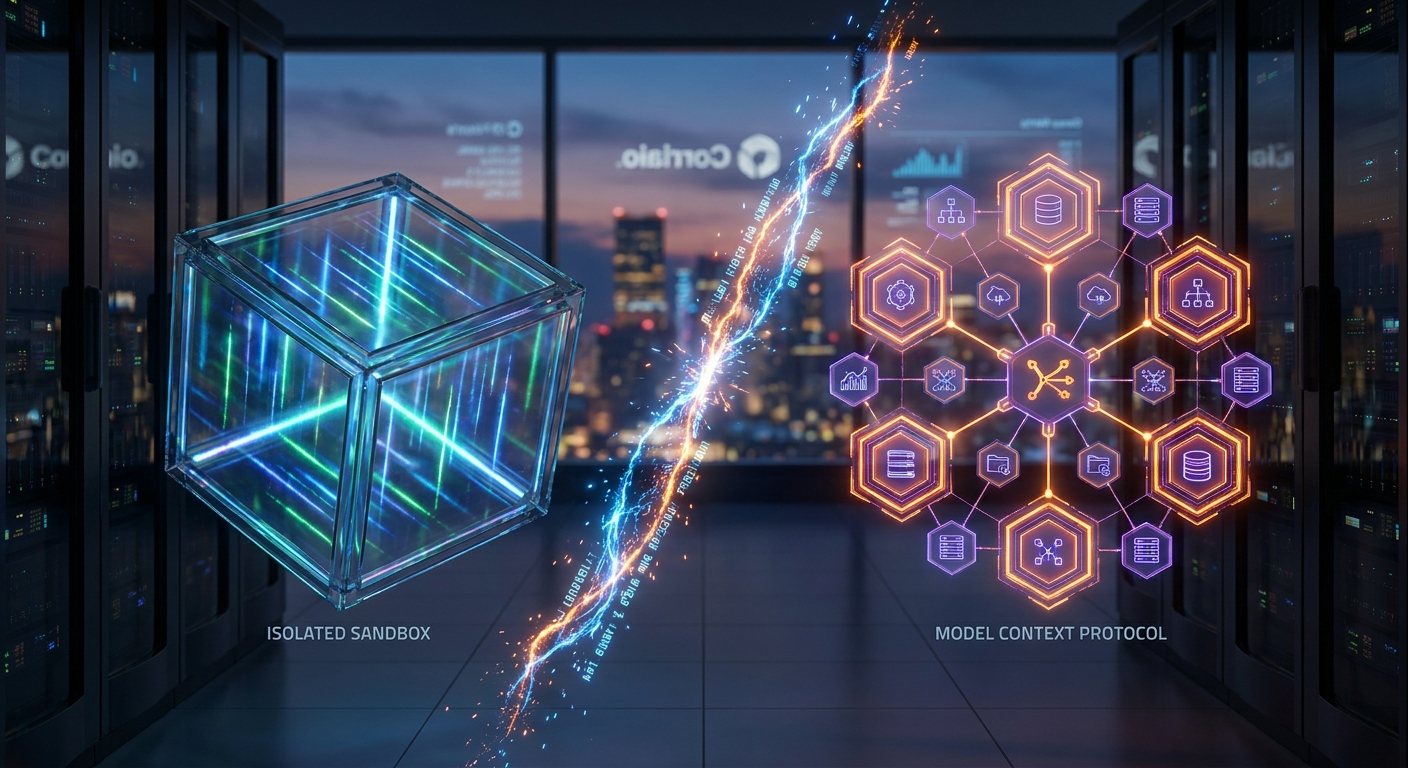
The landscape of autonomous artificial intelligence is currently witnessing a massive architectural divergence. The recent release of OpenAI’s upgraded Agents SDK represents a fundamental paradigm shift from simple chatbot wrappers to industrial-grade agent foundations. In parallel, Anthropic has been pushing an entirely different vision for how enterprise systems should interface with frontier models like Claude 4 and Claude 5.0.
As the founders of Epsilla, we observe this battle not from the sidelines, but from the trenches of enterprise deployment. When clients build on AgentStudio, they demand production-grade orchestration that scales securely. Understanding the technical and strategic differences between the OpenAI harness and the Claude managed agent harness is no longer just an academic exercise—it is the prerequisite for designing resilient AI systems.
This post delivers a deep, zero-bullshit analysis of these two competing architectural philosophies, breaking down their core concepts, security postures, execution models, and their profound implications for the broader ecosystem, including monitoring solutions like ClawTrace.
The Core Concept: Harness and Compute Decoupling
The most critical innovation in OpenAI's new SDK is the absolute decoupling of the "Harness" from "Compute". Historically, frameworks attempted to run the agent's decision loop and its execution tasks in the same unified environment. This created massive security vulnerabilities and stability issues.
OpenAI has solved this by entirely separating the orchestration layer. The Harness handles the control flow, model calls, memory management, tool routing, and pause/resume states. Meanwhile, the Compute layer consists of fully isolated sandboxes strictly dedicated to file I/O, package installation, and code execution.
This is standardized via the Manifest Abstraction. This configuration layer allows developers to define workspaces, cloud storage mounts, and output paths completely independent of the underlying sandbox provider. By making the compute environment interchangeable, OpenAI enables seamless switching between sandbox providers (such as E2B, Modal, or Daytona) with a single line of code. It turns the sandbox into a commoditized utility.
In contrast, the Claude Managed Agent Harness leans heavily into the Model Context Protocol (MCP). Rather than enforcing a strict, remote sandbox architecture for all tasks, Anthropic’s approach standardizes the interface between the model and the data sources. Claude Code and similar local-first workflows typically run the agent loop and execution in a shared context, connecting securely to external tools and internal enterprise data via MCP.
Zero-Trust Sandbox Security vs. Local-First Tool Loops
From an enterprise security perspective, these paradigms offer radically different postures.
OpenAI's approach is rooted in Zero-Trust Sandbox Security. Because the compute sandbox is fully isolated from the harness, sensitive credentials, API keys, and internal network access remain exclusively in the trusted harness layer. The code execution environment is entirely stateless and blind to the orchestrator's secrets. Even if a malicious instruction forces the agent to execute dangerous code, the blast radius is confined to a disposable, ephemeral sandbox. This level of isolation is mandatory for systems processing sensitive data at scale.
Anthropic’s Claude harness, leveraging the Model Context Protocol, relies heavily on host-level security or MCP server boundaries. The agent generally operates with the permissions of the environment in which it is spawned. While this introduces different security considerations, it provides unparalleled fluidity for developers. A local Claude 4 instance can read the developer's file system, execute local terminal commands, and seamlessly blend into an existing workspace without the latency and overhead of spinning up remote sandboxes.
Advanced Resilience and State Management
Building resilient autonomous agents is notoriously difficult due to the non-deterministic nature of frontier models like GPT-6 and Claude 5.0.
OpenAI has engineered native support for state snapshots and checkpoint recovery directly into the harness. If a sandbox crashes mid-execution—perhaps due to a dependency error or memory exhaustion—the harness can instantly revive it from the last known state. This native fault tolerance is combined with built-in multi-sandbox parallelism, allowing a single orchestrator to spawn and manage isolated sub-agent environments concurrently.
Anthropic’s architecture currently relies more on the massive context windows of models like Claude 5.0. State management is largely context-window dependent, requiring the model to read conversation history and local file states to resume interrupted tasks. While incredibly effective for human-in-the-loop workflows, it places a higher cognitive load on the model itself compared to OpenAI's infrastructure-level checkpointing.
Strategic Market Implications: Commoditizing Sandboxes vs. Data
The technical differences between these architectures map directly to the strategic ambitions of both companies.
OpenAI: Commoditizing Compute and Absorbing the Middle Layer
OpenAI is executing a classic platform play: commoditizing the complementary layers. By introducing the Manifest abstraction and partnering with multiple major sandbox providers, OpenAI turns compute environments into a replaceable, highly competitive market. Developers own the Harness, while sandbox providers are forced to compete purely on price and latency.
Furthermore, OpenAI is actively cannibalizing the orchestration layer. By integrating memory, guardrails, and control flow natively into their SDK, they are cutting off the oxygen to third-party frameworks like LangChain, CrewAI, and LangGraph. They are forcing the ecosystem to consolidate around the OpenAI standard.
Anthropic: Commoditizing Connections via the Model Context Protocol
Anthropic, under the leadership of Dario Amodei, is playing a different game. Instead of owning the execution sandbox, Anthropic aims to be the universal router for enterprise data. The Model Context Protocol standardizes how tools and data connect to models. Anthropic's protocol-first approach provides standard interfaces that frameworks and tool-builders can adopt. They act as an enabler—a foundational protocol layer that lifts the existing ecosystem rather than replacing it.
The Epsilla Perspective: Engineering for the Agentic Future
At Epsilla, we build for reality, not theory. The divergence between OpenAI's cloud-native, highly secure asynchronous background task architecture and Anthropic's local-first, human-in-the-loop MCP approach means enterprises must choose the right tool for the job.
If you are building an agentic pipeline to process 10,000 insurance claims asynchronously, OpenAI's zero-trust sandboxing and state checkpointing are unparalleled. If you are building an intelligent developer assistant or an internal data analysis tool that needs frictionless access to local databases, the Model Context Protocol is the clear winner.
Regardless of the underlying harness, deploying these systems into production requires robust observability and orchestration. When building custom multi-agent workflows on AgentStudio, enterprises need visibility into every model call, tool execution, and sandbox state change. This is exactly where ClawTrace becomes indispensable. By implementing comprehensive agent telemetry, engineering teams can debug complex interactions, whether they are running in an ephemeral OpenAI sandbox or connecting via an Anthropic MCP server.
The Agent Harness Wars have just begun. As models continue to scale toward GPT-6 capabilities, the infrastructure surrounding them will dictate which enterprises succeed in deploying autonomous intelligence and which remain stuck in proof-of-concept purgatory. We are building the tools to ensure you fall into the former category.