
Key Takeaways
- Claude's 1 million token context window is now a default, production-ready feature for Opus 4.6 and Sonnet 4.6, moving beyond its previous beta status.
- Anthropic's aggressive, unified pricing model eliminates premiums for long context, making large-scale AI operations economically viable for enterprises.
- While massive context allows ingesting entire codebases, it introduces a "needle in a haystack" retrieval problem, where AI struggles to find specific facts in a sea of data.
- A semantic graph is essential to complement large context windows, providing the structured relationships and conceptual map needed for precise, reliable agentic reasoning.
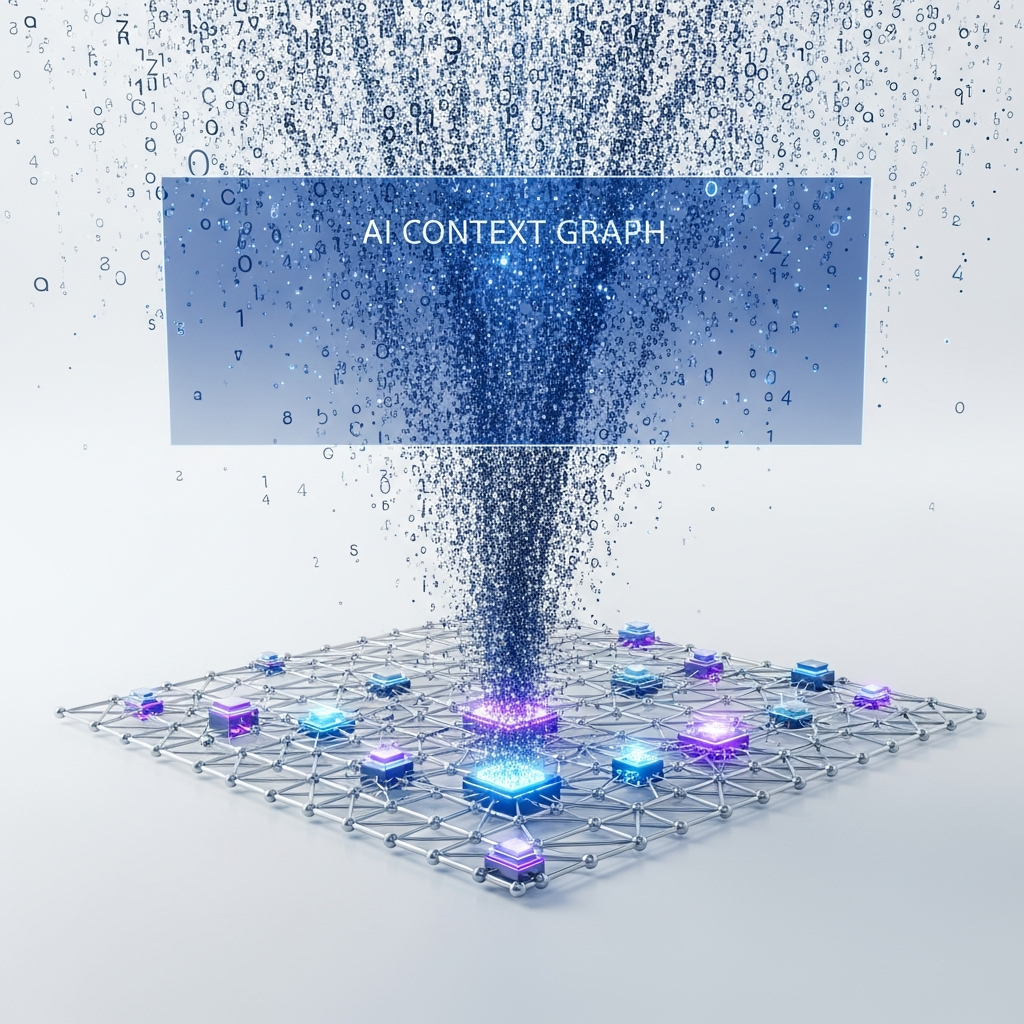
The expansion of Claude's context window to one million tokens is not an incremental update; it's a fundamental shift in the operational paradigm for large language models. This move enables the ingestion and comprehension of entire codebases, vast collections of research papers, and extensive datasets in a single pass. For complex enterprise workflows, this means the ability to reason over lengthy legal documents or maintain state across protracted dialogues without information loss. An Agentic Context Window is the functional memory space an AI model uses to not only store vast amounts of information but also to actively maintain state, reason over relationships, and execute complex, multi-step tasks autonomously.
Practically, a developer can now load an entire project repository into the context and begin debugging or feature development immediately. The previous constraints that forced engineers to manually chunk files, create lossy summaries, or constantly prune conversation histories have been effectively removed.

Pricing as a Strategic Weapon
Anthropic's latest move isn't just a technical update; it's a calculated, aggressive play on the economics of AI. They have weaponized their pricing model with a simple but brutal strategy: unified pricing with zero premium for long context.
In their general availability announcement, Anthropic confirmed that both Claude Opus 4.6 and Sonnet 4.6 now support the full 1M token context window. Critically, they have eliminated the long-context premium, made full rate limits available, and removed the need for a beta header.
The pricing is now a flat rate across the entire context window:
- Opus 4.6: $5 per million input tokens, $25 per million output tokens.
- Sonnet 4.6: $3 per million input tokens, $15 per million output tokens.
The shift from experimental feature to default capability is a critical inflection point in technology adoption. Anthropic has just crossed that threshold with its million-token context window. Previously, developers had to explicitly opt-in via a beta header. Now, any API call exceeding 200K tokens automatically engages the long-context model. The old beta header is simply ignored, requiring no code changes.
This is more than a minor API update; it's a declaration. The million-token context is no longer a novelty but a core competency.
The New Atomic Unit of Work: From a Single File to the Entire Repository
A fundamental shift is occurring at the workstation of every developer, and it has little to do with syntax generation. The true transformation lies in the unit of work itself.
Consider the scene at an OpenAI Codex hackathon, where a hundred engineers were tasked with building demos in four hours. Projects that would have previously consumed days, if not weeks, were completed in a single afternoon. This wasn't just an incremental speed-up; it was a phase change in development velocity. The advent of million-token context windows is pushing this paradigm to its logical, and extreme, conclusion.
Early feedback from users operating at this new scale is illuminating. Adhyyan Sekhsaria, a founding engineer at Cognition, articulates the problem with brutal clarity. Previously, large code diffs simply couldn't fit into a 200k token window. This forced their agents to process code in fragmented chunks, inevitably losing the critical context of cross-file dependencies. With a million-token context, they can now ingest the entire diff in a single pass. The result is not just higher-quality code review, but a radically simpler agent architecture.
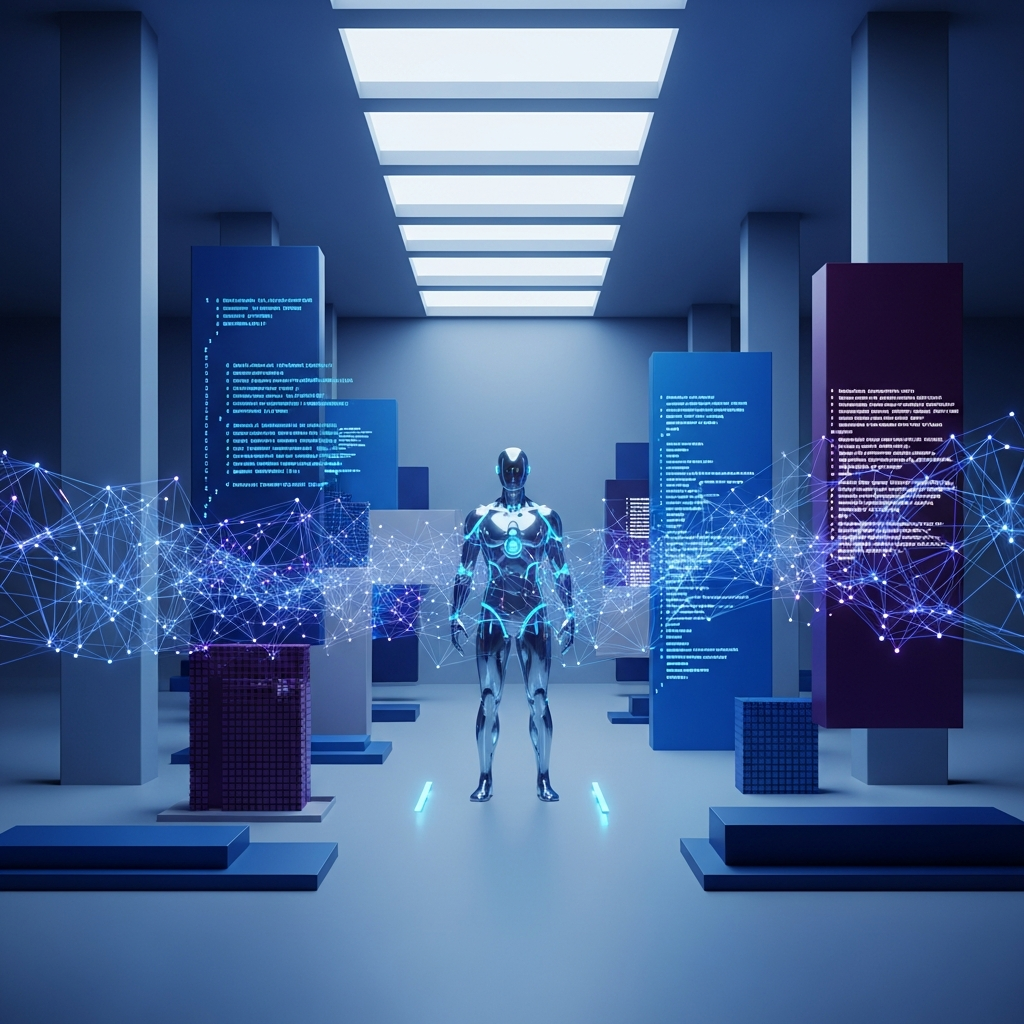
However, simply expanding the context window is not a panacea. It introduces a new, insidious problem: the "needle in a haystack" phenomenon. When an AI model is forced to process one million tokens of unstructured text, its ability to reliably retrieve a specific, isolated fact drops precipitously. It can see the forest, but it loses the trees.
This is where the architecture of the future diverges from the brute-force approach of the present. A massive context window is an incredible scratchpad, but it is not a permanent, queryable state.
The Epsilla Imperative: Structuring the Infinite Context
The solution is not just more context; it is structured context. This is the fundamental premise of Epsilla's Agent-as-a-Service platform. We recognize that while models like Claude Opus 4.6 can temporarily hold a million tokens, true enterprise agentic AI requires a permanent, deterministic memory architecture.
This is achieved through the Semantic Graph.
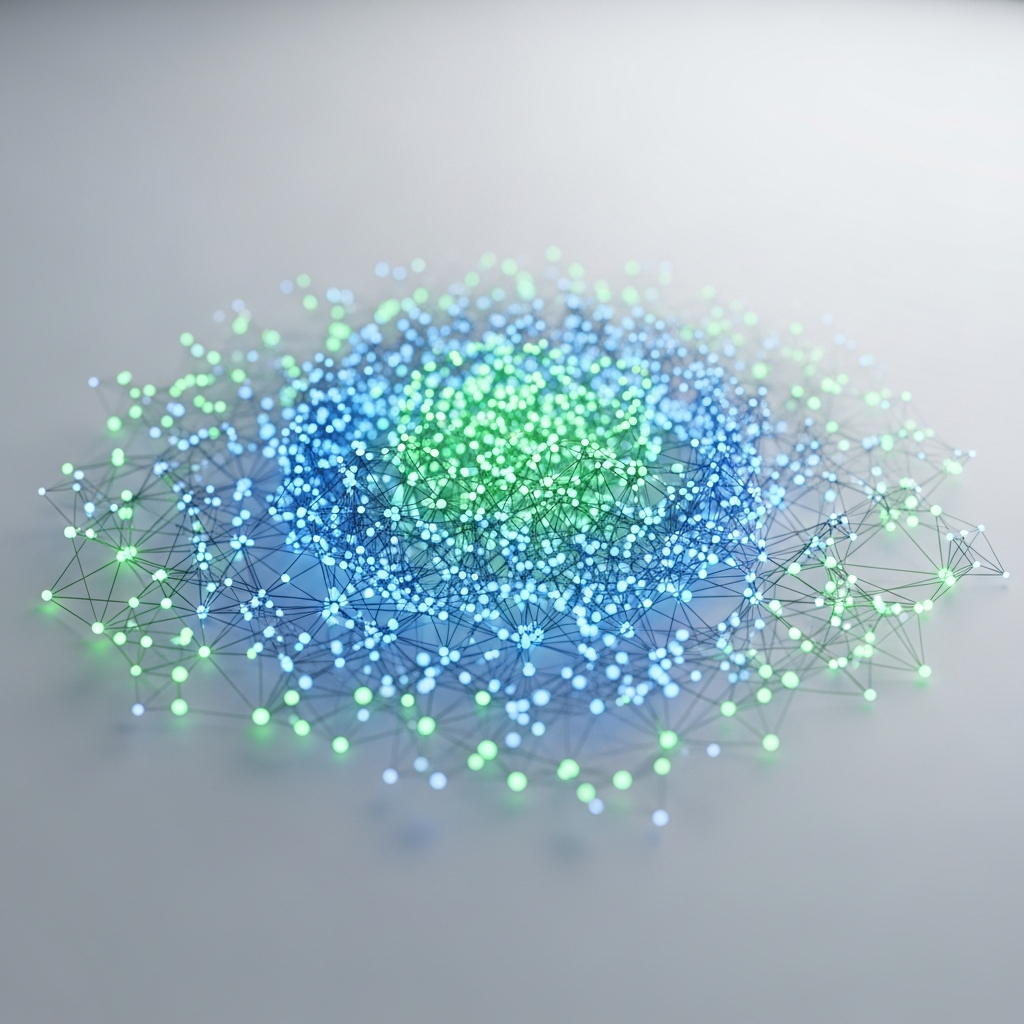
Instead of dumping raw, unstructured codebases or legal archives into a transient context window, the Semantic Graph parses, structures, and maps the relationships between entities, concepts, and historical interactions. When an agent powered by Epsilla needs to execute a task, it doesn't need to re-read a million tokens. It queries the Semantic Graph, retrieving exactly the structured context required for the immediate decision.
This unified context management transforms AI from a stateless, albeit powerful, processor into a stateful, reliable enterprise agent. The 1M token window is a massive leap forward, but it is the Semantic Graph that will ultimately organize and harness that power for reliable, production-grade execution.
FAQ: AI Context and Semantic Graphs
Q1: Why is a 1 million token context window important for AI agents?
A: It allows AI agents to ingest massive amounts of data—like entire codebases or comprehensive legal documents—in a single pass. This eliminates the need for manual chunking and ensures the agent has the full scope of information necessary for complex reasoning without losing critical context.
Q2: What is the "needle in a haystack" problem with large context windows?
A: When an AI model processes an enormous volume of unstructured text (like 1 million tokens), its ability to reliably locate and retrieve a specific, isolated fact decreases. The model can comprehend the overarching themes but struggles with precise detail extraction amidst the noise.
Q3: How does a Semantic Graph solve the limitations of large context windows?
A: A Semantic Graph structures information by mapping the relationships between data points, creating a persistent, queryable knowledge base. Instead of re-reading a massive, unstructured context window for every task, an AI agent can instantly retrieve the exact, relevant data it needs, ensuring deterministic and reliable execution.