In February 2026, OpenAI released a paper titled Harness engineering: leveraging Codex in an agent-first world. The results were radical: over five months, a small team of engineers drove agents to construct and iterate a real product without writing a single line of manual code. The codebase reached one million lines, managed via approximately 1,500 automated pull requests.
Simultaneously, Thoughtworks published a parallel commentary on Martin Fowler’s site. They validated the approach's strong performance in maintainability and internal consistency, but raised a critical question: a significant gap remains in validating functional correctness.
When read together, these analyses broadcast a clear signal: the primary battleground of software engineering is migrating away from writing code. The new frontier is designing the environments, constraints, feedback loops, and governance mechanisms that control autonomous agents.
What is an Agent Harness?
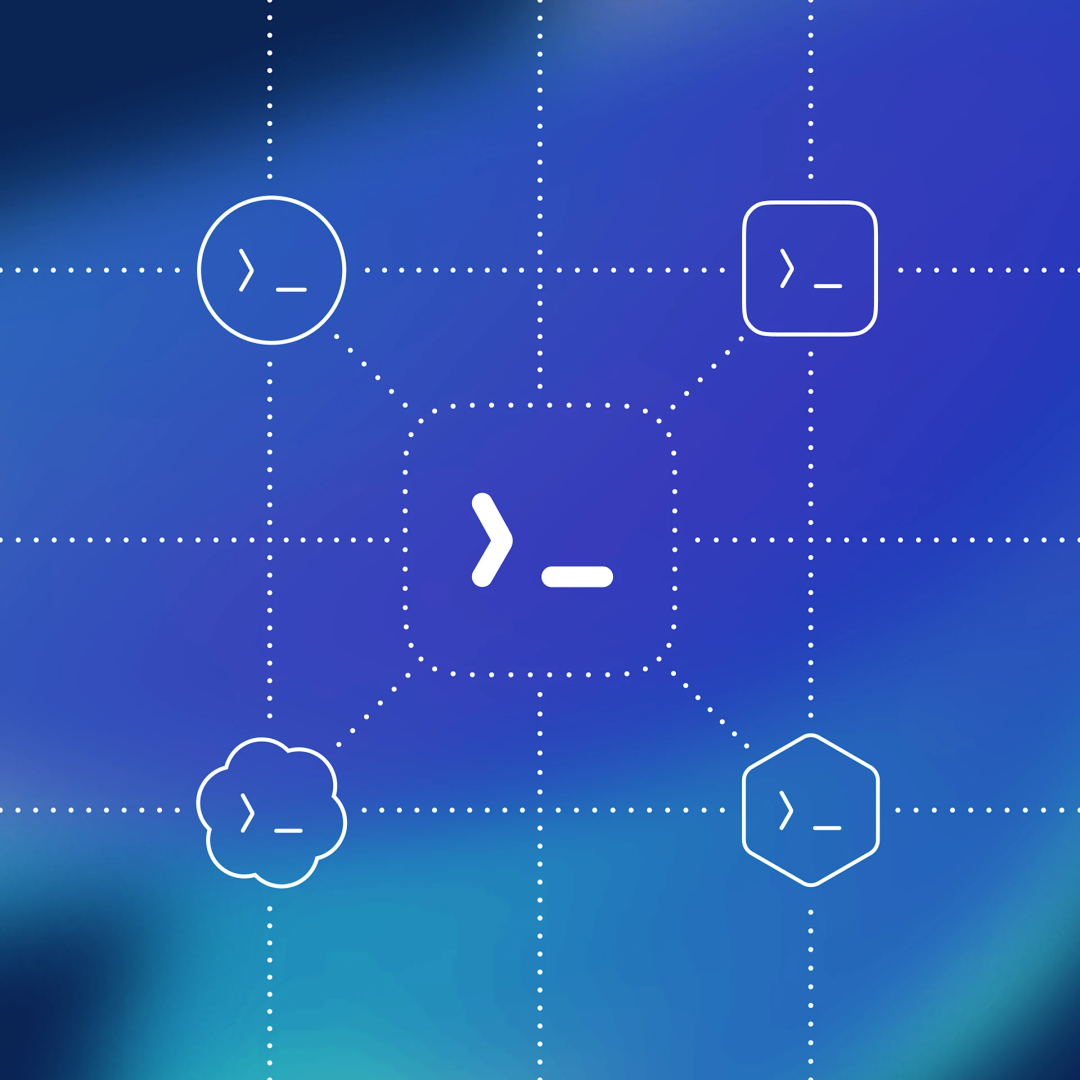
An Agent Harness is the infrastructure layer wrapped around an AI model, built specifically to manage long-running tasks. It is not the agent itself; it is the software system that governs how the agent operates.
If the LLM is the CPU, the harness is the operating system.
The discourse around AI agents often fixates on prompt engineering—the art of crafting the perfect instruction to elicit a desired one-time output. This is a tactical, short-term approach. The strategic, long-term challenge is Harness Engineering: designing the software engineering control systems that govern AI agents.
The objective of Harness Engineering is not to make an agent "get it right this time." It is to build a system of context organization, architectural constraints, automated validation, and continuous governance that ensures agents consistently produce correct, auditable, recoverable, and scalable work over thousands of iterations.
The Inevitable Bottleneck: Human Attention
The imperative for this new discipline arises from a simple reality: agent throughput is rapidly outpacing human review capacity. The traditional software development lifecycle of "write-review-merge" breaks down when a fleet of agents can generate more code in an hour than a team of senior engineers can review in a week. The scarce resource is no longer the speed at which we can type, but the finite bandwidth of human time and attention.
Architectural Rigor: The Foundation for Agent Autonomy
To prevent AI-generated systems from descending into chaos, strict, layered domain architecture is required. This is not a suggestion; it is a non-negotiable set of systemic constraints. Code within any business domain must adhere to a unidirectional dependency flow—for example: Types → Config → Repo → Service → Runtime → UI. Dependencies cannot flow backward.
The Fallacy of the AGENTS.md File
Two dangerous misconceptions are gaining traction in the agent development space. The first is that a comprehensive AGENTS.md file is a sufficient harness. The second, and more perilous, is that more powerful models permit looser architectural discipline.
Field experience proves the exact opposite.
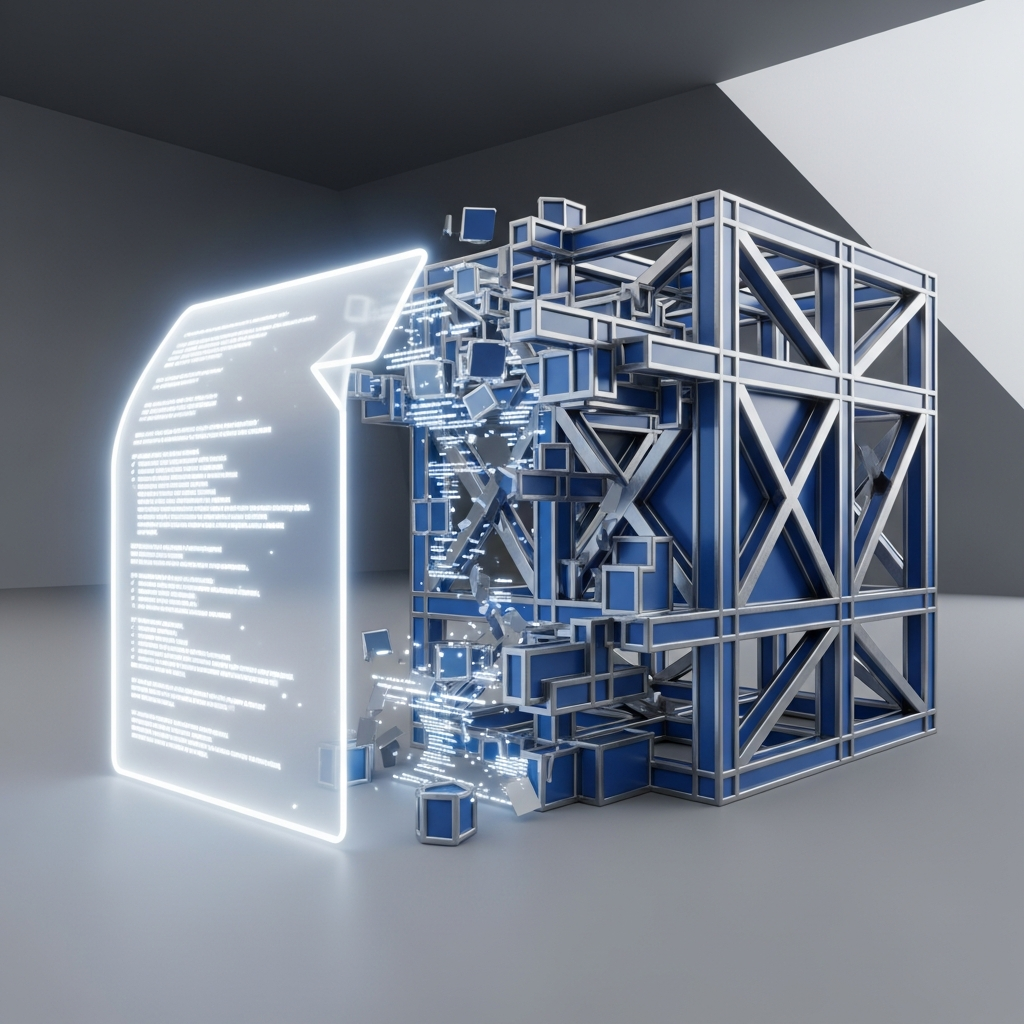
A single markdown file of rules is a brittle solution. It will rapidly decay, becoming obsolete as the system evolves. To combat the inevitable drift of an autonomous agent, its operational constraints must be structured, verifiable, and recyclable. They cannot live in a static document.
This leads to the second fallacy. The temptation is to believe that a highly capable frontier model can compensate for a lack of engineering rigor. The reality is that greater agent autonomy demands a more constrained, not more relaxed, operational environment. The engineering discipline doesn't disappear; it gets front-loaded into the system's core design. The harness becomes the bedrock of reliability.
The Missing Component: Functional Correctness Validation
Current harness practices are overly focused on internal quality—code consistency, linting, documentation. But a codebase can be perfectly "clean" from an engineering standpoint and still fail catastrophically at its intended business function. It can flawlessly execute a user journey that leads to the wrong outcome.
A complete harness must therefore move beyond code quality and rigorously validate behavioral correctness. This requires at least four additional components:
- User-Value E2E Validation: A matrix of end-to-end tests that validate outcomes from the user's perspective, not just isolated function calls or static checks.
- Critical Path SLOs & Regression Budgets: Service Level Objectives for key workflows, coupled with budgets for change success rates, rollback frequencies, and defect escape rates.
- Real-World Acceptance & Adversarial Datasets: Curated datasets that reflect genuine usage patterns and include adversarial cases designed to probe edge-case failures.
- Intent-Failure Detection: A mechanism to identify scenarios where the agent "followed the rules but missed the product's intent."
A harness should not just answer, "Is the code well-structured?" It must definitively answer, "Is the product behaving correctly?"
An Actionable 30-60-90 Day Roadmap to a Robust Harness
Building this level of control is a phased process.
Days 0–30: Establish the Minimum Viable Harness.
Transform your AGENTS.md from a rulebook into a high-level entry point. Move the actual rules into a structured docs/ directory for architecture, standards, and quality plans. Implement 3-5 high-value, custom linting rules that target your most common failure patterns, such as naming conventions, boundary parsing, or structured logging.
Days 31–60: Close the Observability and Validation Loop.
The agent must be able to perceive its own operational environment. This means granting it direct, structured access to its logs, metrics, and traces. Concurrently, convert your most critical user journeys into executable acceptance scenarios that can be replayed and validated automatically, creating a tight feedback loop. Begin introducing small, frequent, auto-generated PRs for minor fixes.
Days 61–90: Implement Entropy Governance.
Introduce automated "garbage collection" tasks that periodically scan for and remediate pattern drift in the agent's behavior and knowledge base. Establish a quality dashboard to track technical debt by domain or system layer. Finally, codify the most frequent human feedback from code reviews into automated rules, reducing manual toil and institutionalizing best practices.
The guiding principle is sequential: achieve detectability before granting autonomy; establish constraints before optimizing for throughput.

The Strategic Shift: Context Engineering over Prompt Engineering
The purpose of Harness Engineering is not to replace developers. It is to liberate them from low-leverage activities and empower them to focus on the system-level levers that truly matter. Previous engineering paradigms focused on "how to write the code correctly." This new paradigm focuses on: How do we ensure an agent continues to do the right thing over time? How do we encode human judgment into repeatable, automated mechanisms?
This necessitates a shift from Prompt Engineering—a tactical method of coaxing desired behavior—to Context Engineering.
Context Engineering is not about telling the agent what to do; it's about architecting the world the agent perceives. It involves dynamically constructing a rich, relevant, and accurate context for every decision point. True context is more than a collection of retrieved documents; it's a structured understanding of entities, their relationships, and their state over time.
This is precisely the problem we designed Epsilla to solve. Our Agent-as-a-Service platform is, in essence, a pre-built, enterprise-grade harness. We abstract away the immense complexity of building these operational environments. Central to our architecture is the Semantic Graph, which moves beyond simple vector similarity to provide the unified context management necessary for sophisticated Context Engineering. By mapping and maintaining the relationships between data, users, and tools, we provide the agent with a coherent world model, drastically reducing hallucinations and improving task success rates.
By 2026, the competitive advantage will not belong to those with the largest model, but to those with the most effective and efficient harness. The focus is shifting from the raw intelligence of the core model to the systemic intelligence of the entire agent architecture. The engineering challenge has moved up the stack, and building the definitive system for agent operation is the new imperative.